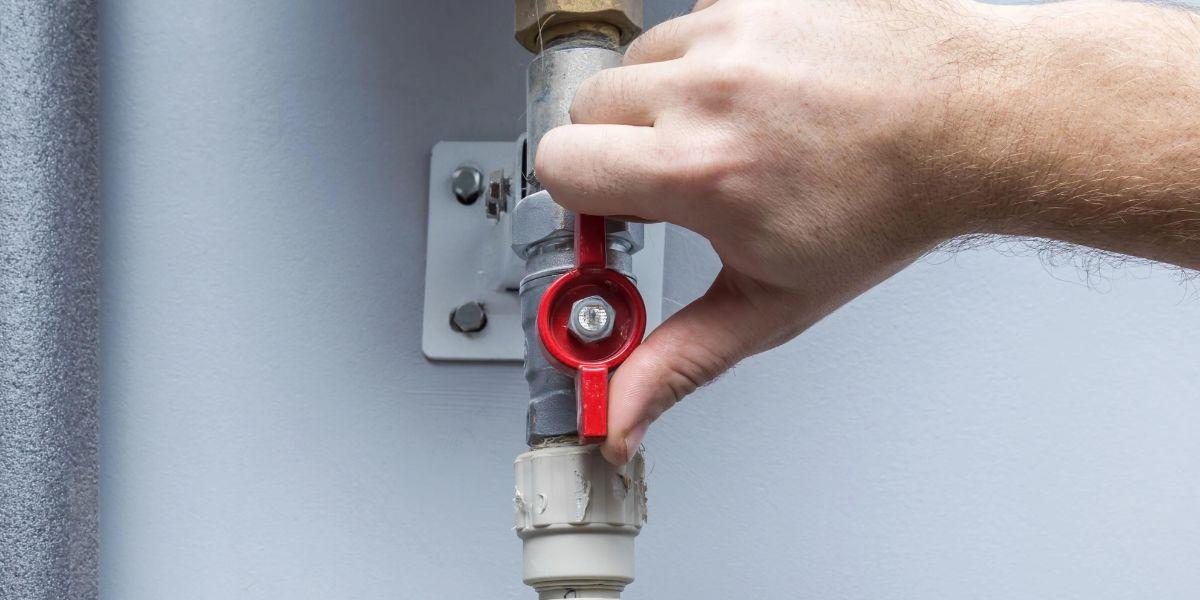
Importance of water shut-off valves
Water shut-off valves play a fundamental role in plumbing systems. These devices allow for the control of water flow at different points in the piping network of a home or building. Their main function is to quickly and easily open or close the water flow.
It is crucial to understand the importance of properly choosing and maintaining water shut-off valves. A defective or poorly installed shut-off valve can lead to leaks, water loss, and structural damage. Additionally, having quality shut-off valves that meet the system's needs will allow for more precise control of water flow and greater efficiency in consumption.
Types of water shut-off valves
There are different types of water shut-off valves, each with specific characteristics and applications:
Ball valves
This type of valve has a sphere or ball inside that allows for controlling the flow of water. They are very durable and easy to operate. They are commonly used in main piping systems and usually have a lever design to open and close the water flow.
Characteristics
They have a sphere or ball inside that controls the flow of water.
Durable and sturdy design.
Easy operation with a lever to open and close the water flow.
Widely used in main piping systems.
Gate valves
These valves have a gate that lifts or lowers to allow or stop the flow of water. They are very effective for regulating the flow rate, as they provide a full open or closed position, without intermediates. They are used in residential, commercial, and industrial systems.
Characteristics
They have a gate that lifts or lowers to allow or stop the flow of water.
It allows for precise flow control, as it offers a fully open or closed position.
Ideal for regulating water flow in residential, commercial, and industrial systems.
Reliable and long-lasting operation.
Butterfly valves
These valves have a butterfly-shaped disc that rotates 90 degrees to control the flow of water. They are compact and easy to operate, and are used in large systems, such as wide-diameter pipes.
Characteristics
They have a butterfly-shaped disc that rotates 90 degrees to control the flow of water.
Compact design and easy operation.
They are used in large piping systems with wide diameters.
Ideal for applications where quick control of water flow is required.
Ball valves
These valves operate using a sphere with a hole in its interior. When the valve is turned, the hole aligns with the pipe, allowing water to flow. They are very efficient and are used in water and gas piping systems.
Characteristics
They operate through a perforated sphere inside that aligns the perforation with the pipe to allow the passage of water.
They offer efficient performance and a tight seal.
They are used in water and gas piping systems.
They provide precise flow control and are easy to operate.
Factors to consider when choosing a shut-off valve
When selecting a water shut-off valve, it is important to consider the following factors:
Manufacturing material: The most common materials for shut-off valves are brass, stainless steel, and plastic. Each material has its own advantages and disadvantages in terms of durability, corrosion resistance, and price.
Size and compatibility: It is essential to choose a shut-off valve that fits the diameter of the pipe. There must be compatibility between the size of the valve and the pipe to ensure a proper seal and avoid leaks.
Pressure and flow: Depending on the pressure and flow of the water system, it is necessary to select a shut-off valve that can withstand these conditions without issues. It is important to check the manufacturer's technical specifications to ensure optimal performance.